Nicotinamide Fights Eczema, Skin Cancer, Sunspots
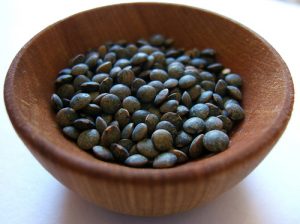
Lentils provide good nicotinamide building blocks. Photo by Laura Spengler
The skin is a living organ, connected to the rest of the body’s organs.
Skin conditions reflect the health of the rest of the body. This is why, for example, we will put our hands on the forehead to gauge a fever. High skin temperature often indicates inflammation. This often relates to the body’s fighting an infection or urgent immune response.
One type of immune response reflected on the skin is autoimmunity. This can be described as skin sensitization or eczema. Skin sensitivity can be a delayed or immediate reaction to any number of environmental immune responses.
Eczema often occurs when autoimmunity flares up
In this article
What is eczema?
Basically, eczema is an irritation of the epidermis layer – the skin’s surface layer. This can come in the form of a rash, redness, patchy pigments, or oozing, weeping boils and papules. These can crust and scale and become itchy.
Between 9 and 30 percent of the U.S. population may have eczema or another according to the research. Types of eczema can range from allergic contact dermatitis to different types of skin irritations. A 2007 U.S. population study estimated that nearly 18 million people live with ongoing cases of atopic dermatitis – which typically presents as eczema.
Eczema can be a response to a wide range of different environmental factors. But it is often the result of a burdened or weakened immune system.
Environmental factors can include allergens, detergents, soaps, disinfectants, mold, bacteria, mold, viruses, stress, hormones, and a host of different foods – assuming the digestive tract doesn’t digest them properly.
This connection between food sensitivities and eczema gets more real than that. In fact, new research has determined that eczema early in life is linked to food sensitivities later on.
Eczema linked to food allergies later on
 In a study published in 2016, researchers followed nearly 1,500 children. A total of 849 the children tested positive at 18 months for some form of allergic skin sensitivity. Another 649 children were also tested. These had a negative skin sensitivities to allergens.
The researchers found those who had skin sensitivities at 18 months had a significantly greater likelihood of having a food allergy by the time they were three years old. Those who had negative skin sensitivity had far less risk of getting a food allergy.
So what can a mother do to avoid skin allergies – and therefore food allergies – in her child?
Nicotinamide reduces eczema
Research from the UK’s University of Southampton tested 497 women and their children from pregnancy through to the baby’s 12 months of age.
The researchers tested blood nicotinamide levels in the pregnant women and then examined each child at six months and 12 months.
They found that those mothers who had higher blood levels of nicotinamide had a third less chance of their baby having eczema.
The lead researcher, Dr Sarah El-Heis, stated:
“Nicotinamide cream has been used in the treatment of eczema but the link between the mother’s levels of nicotinamide during pregnancy and the offspring’s risk of atopic eczema has not been previously studied. The findings point to potentially modifiable influences on this common and distressing condition.”
What is Nicotinamide cream?
Nicotinamide cream has been shown to improve skin elasticity by adding a moisture barrier. It also boosts levels of anthranilic acid levels. Anthranilic acid has also been referred to as vitamin L.
Boosting levels of anthranilic acid and nicotinamide has been shown to decrease the risk of eczema.
University of Southampton professor Keith Godfrey commented on the association:
“More research is needed to investigate this interesting association, but the findings are further evidence of the potential benefits of eating a healthy balanced diet during pregnancy.”
Nicotinamide reduces skin cancer incidence
A 2015 phase III study from the University of Sydney studied 386 people with a history of skin cancer. The patients took nicotinamide supplements or placebo for a year.
The researchers found that those who took the nicotinamide supplements had a 23 percent reduced incidence of recurrent skin cancer compared to the placebo group.
The researchers also found that the nicotinamide supplements reduced pre-cancerous sun spots by 15 percent.
Natural sources of nicotinamide
Nicotinamide is naturally made in the body from vitamin B3 (niacin). It is also made from tryptophan – an amino acid. Both of these nutrients are contained in many foods.
Practically any good protein source, such as beans, nuts, seeds, spirulina and leafy greens will contain a reasonable amount of tryptophan. Yogurt and other cultured dairy foods also contain considerable tryptophan.
In terms of niacin, lentils, lima beans, fava beans and other contain good measures of vitamin B3. So do many leafy greens and beets. Sunflower seeds and brewer’s yeast are also good niacin sources.
Most multivitamins and fortified foods also contain a reasonable amount of niacin as well.
High-dose niacin or nicotinic acid is often used for cardiovascular health. Taking a high-dose flush niacin supplement can come with some side effects, including skin flushing. Best to talk to your doctor before doing this form of supplementation on a chronic basis.
Supplemented nicotinic acid is different from nicotinamide supplements, however. Supplements of nicotinamide are available – and this is what the University of Sydney study used.
What about skin creams with nicotinamide and other antioxidants?
Skin creams with niacin and other antioxidants have also been shown to reduce eczema. A 2016 study tested 25 patients with a cream with vitamin B and other botanical antioxidants. The study found a 79 percent reduction in itching and 44 percent decrease in dryness / flaking.
What about primrose or borage oil for eczema?
Many alternative health advocates recommend the internal (oral) use of primrose oil or borage oil for eczema. Unfortunately, this has not panned out in the research.
A 2013 Cochrane review from the University of Minnesota Medical School analyzed 27 studies that tested either primrose oil or borage oil treatment for eczema. The studies included 1,596 people.
The review found that internal use of borage or primrose oil was no better than placebo at reducing chronic eczema symptoms.
Are there herbal remedies for eczema?
Possibly. A 2015 review of Chinese Herbal Medicine did find significant treatment success for eczema using Chinese herbs – at least for quality of life. A visit to your local Chinese Medicine expert (acupuncturist) would be a good call if you would like to investigate this approach further.
What about probiotics for eczema?
The link between probiotics and eczema has been confirmed. Learn the connection between our intestinal microbiome and eczema, and strategies to boost our body’s probiotics:

Discover Niacinamide cream
REFERENCES:
El-Heis S, Crozier SR, Robinson SM, Harvey NC, Cooper C, Inskip HM; Southampton Women’s Survey Study Group., Godfrey KM. Higher maternal serum concentrations of nicotinamide and related metabolites in late pregnancy are associated with a lower risk of offspring atopic eczema at age 12 months. Clin Exp Allergy. 2016 Oct;46(10):1337-43. doi: 10.1111/cea.12782.
Berke R, Singh A, Guralnick M. Atopic Dermatitis: An Overview. Am Fam Physician. 2012 Jul 1;86(1):35-42.
Chen AC, Martin AJ, Choy B, Fernández-Peñas P, Dalziell RA, McKenzie CA, Scolyer RA, Dhillon HM, Vardy JL, Kricker A, St George G, Chinniah N, Halliday GM, Damian DL.A Phase 3 Randomized Trial of Nicotinamide for Skin-Cancer Chemoprevention. N Engl J Med. 2015 Oct 22;373(17):1618-26. doi: 10.1056/NEJMoa1506197.
Bamford JT, Ray S, Musekiwa A, van Gool C, Humphreys R, Ernst E. Oral evening primrose oil and borage oil for eczema. Cochrane Database Syst Rev. 2013 Apr 30;(4):CD004416. doi: 10.1002/14651858.CD004416.pub2.
Gu SX, Zhang AL, Coyle ME, Chen D, Xue CC. Chinese herbal medicine for atopic eczema: an overview of clinical evidence. J Dermatolog Treat. 2016 Aug 18:1-5.
Draelos ZD. A pilot study investigating the efficacy of botanical anti-inflammatory agents in an OTC eczema therapy. J Cosmet Dermatol. 2016 Jun;15(2):117-9. doi: 10.1111/jocd.12199.